


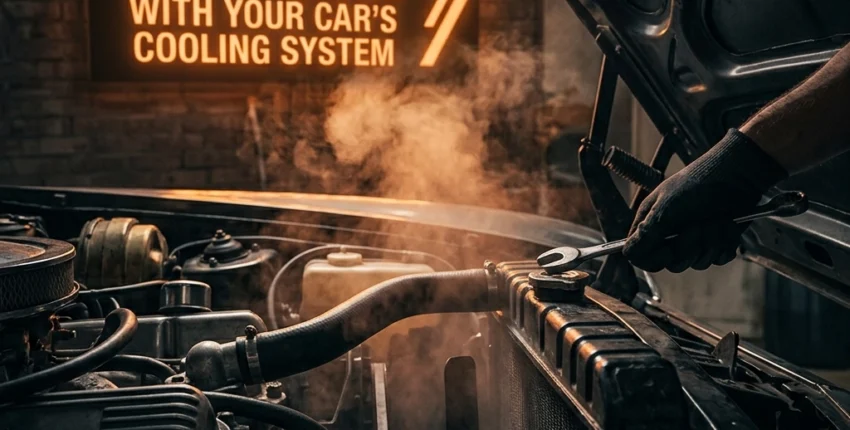
Picture this: You’re cruising down Florida Avenue in the middle of a July afternoon. The humidity is thick enough to chew, and the sun is beating down on your hood. Suddenly, you notice the needle on your temperature gauge creeping toward the red zone. Tick, tick, tick. Then, the dreaded wisps of white steam start curling out from your hood. Hiss… ssssss.
Your car isn’t just “running hot”: it’s throwing a full-blown tantrum.
Here at Autosauce, we see it all the time. As a family-owned business right here in Lakeland, FL, we know that our tropical climate is absolute murder on your vehicle’s cooling system. Our certified technicians have rescued countless engines from the brink of meltdown, and more often than not, the culprit is a simple mistake that could have been avoided.
Your cooling system is essentially the “life support” for your engine. If it fails, your engine can warp, crack, or seize entirely: turning your prized ride into a very expensive paperweight. To help you stay on the road (and out of the breakdown lane), we’ve rounded up the 7 most common mistakes drivers make with their cooling systems.
1. Topping Off with Tap Water
We get it. You’re in a pinch, you see the reservoir is low, and the garden hose is right there. It’s just water, right? Wrong.
Using tap water is one of the quickest ways to invite a “mineral invasion” into your engine. Tap water is full of minerals like calcium and magnesium. When that water heats up inside your engine, those minerals settle out and form “scale”: a hard, crusty buildup that coats the inside of your radiator and engine passages. Think of it like clogged arteries in a heart.
Over time, this scale prevents heat from escaping, leading to localized hot spots. Always use distilled water mixed with the proper concentrate, or better yet, a pre-mixed 50/50 solution. If you’ve been “hose-feeding” your car, it might be time for a professional flush at our shop for some auto repair Lakeland FL experts can handle with ease.

2. Playing “Mad Scientist” by Mixing Coolants
Not all coolants are created equal. You’ve probably noticed the rainbow of colors at the auto parts store: neon green, bright orange, pink, blue, and even purple. These aren’t just for show.
Different vehicles require different chemical formulas (like IAT, OAT, or HOAT). If you mix an older “green” silicate-based coolant with a modern “orange” organic acid technology coolant, they can actually react chemically. The result? A thick, nasty sludge that looks like brown Jell-O. This “goo” stops flowing, plugs up your heater core, and kills your water pump.
If you aren’t sure what’s in your tank, don’t guess. Bring it to our certified technicians who can perform advanced auto diagnostics to ensure your system is clean and chemically balanced.
3. Treating Coolant Like It Lasts Forever
Many drivers think that as long as the “juice” is in the tank, everything is fine. But coolant has a shelf life. Over time, the protective additives that prevent rust and corrosion break down.
When coolant becomes “old,” it can actually turn acidic. Instead of protecting your engine, it starts eating it from the inside out. This leads to pinhole leaks in the radiator and degraded seals. In the Florida heat, old coolant also loses its ability to transfer heat efficiently.
At Autosauce, we recommend checking your coolant’s pH levels and clarity regularly. If it looks like swamp water, it’s definitely time for a change. You can check out our vehicle inspection checklist for more tips on staying ahead of maintenance.
4. The “Liquid Band-Aid” (Using Stop-Leak Products)
We’ve all seen those bottles of “Stop Leak” that promise to fix a blown head gasket or a leaking radiator in five minutes. While they might stop a leak temporarily, they are often a “death sentence” for other parts of your cooling system.
These products work by circulating particles that harden when they hit air. The problem? They don’t know the difference between a leak and the tiny, delicate passages in your heater core or the thin fins of your radiator. They coat everything, drastically reducing your car’s ability to stay cool.
If you have a leak, the only real fix is a mechanical one. If you’re worried about your car’s AC or heating performance: which often goes hand-in-hand with cooling issues: come see us for ac repair lakeland fl. We’ll find the leak the right way, without gunking up your engine.

5. Removing the Thermostat to “Fix” Overheating
There’s an old-school myth that says if your car is overheating, you should just take the thermostat out so the coolant flows constantly. This is a big “no-no.”
Your thermostat acts like a gatekeeper. It stays closed until the engine reaches a certain temperature, then opens to let coolant circulate. Without it, the coolant often moves too fast through the radiator, meaning it doesn’t have enough time to actually release its heat to the air.
Furthermore, modern engines are designed to run at a very specific temperature for fuel efficiency and emissions. A “naked” engine without a thermostat will run too cold, causing poor gas mileage and increased engine wear. It’s like trying to run a marathon while shivering: it just doesn’t work well!
6. Skipping the “Burp” After a Refill
When you drain and refill your cooling system, air inevitably gets trapped inside. Because air is a gas, it doesn’t move heat like liquid coolant does. These “air pockets” can get stuck near the cylinder heads, creating massive hot spots while your dashboard gauge stays deceptively cool.
If you hear a “gurgle-gurgle” sound coming from behind your dashboard when you start the car, that’s air in your heater core begging to be let out. “Burping” or bleeding the system is a critical step that many DIYers skip. Our team uses specialized vacuum-filling tools to ensure there’s not a single bubble left in your system, giving you total peace of mind.

7. Ignoring the “Weep Hole” Warnings
Your water pump is the heart of the system: the “pump” that keeps the “blood” (coolant) moving. Most water pumps have a tiny “weep hole” designed to leak a little bit of coolant when the internal seal starts to fail.
If you see a few drops of colored fluid on your driveway or notice a faint, sweet smell (like maple syrup) after you park, your car is trying to tell you something! Ignoring these early warning signs is a recipe for disaster. If that pump fails completely while you’re on the Polk Parkway, your engine will overheat in seconds.
Staying proactive with early warning system maintenance is the best way to save thousands of dollars on a replacement engine down the road.
Why Lakeland Drivers Trust Autosauce
We aren’t just another big-box repair shop. Autosauce is a family-owned and operated business. When you walk through our doors, you’re talking to neighbors who care about your safety and your wallet. Our certified technicians treat every vehicle like it belongs to their own family.
Whether you need a simple coolant flush, a complex water pump replacement, or general auto repair Lakeland FL, we use the latest technology and a “honesty-first” approach. We believe in doing the job right the first time so you can enjoy the Florida sunshine without worrying about the temperature gauge.

Sounds Refreshing, Doesn’t It?
Don’t wait for the steam to start rising to think about your cooling system. A little bit of TLC today prevents a massive headache tomorrow. If your car is acting “weird,” making strange noises, or if you simply can’t remember the last time you had your coolant checked, give us a shout!
Ready to keep your cool?
Schedule an appointment with Autosauce today and let our pros give your car the “check-up” it deserves. We’ll make sure your cooling system is ready to handle whatever the Florida weather throws your way!
